Call: 08045801464
 Send Inquiry

 Send Inquiry
Pulp moulding machine
Price 2000000 INR/ Set
MOQ : 1 Unit
Pulp moulding machine Specification
- Grade
- Semi-Automatic
- Type
- Other
- Computerized
- No
- Control System
- Human Machine Interface
Pulp moulding machine Trade Information
- Minimum Order Quantity
- 1 Unit
- Supply Ability
- 1 Unit Per Month
- Delivery Time
- 20 Days
- Main Export Market(s)
- Asia
- Main Domestic Market
- All India
About Pulp moulding machine
Pulp Moulding Machine Manufacturer Supplier in India for producing egg trays egg cartons paper plates bowls cup holders fruit trays and molded pulp packaging from wasterecycled paper pulp Features Vacuum forming dewatering transfer mould customized moulds hot pressdrying options and semiautomaticautomatic configurations JK Engineering Works Jaipur Customized machines and complete pulp moulding solutionsEfficient Semi-Automatic Operation
With its semi-automatic grade and HMI control system, the machine provides operational efficiency and user-friendly management. Operators interact directly with the interface, ensuring accurate production settings and reducing manual labor. The simplified automation helps maintain steady output while allowing flexibility for customization and quick adjustments.
Versatile Applications for Eco-Friendly Products
The pulp moulding machine is suitable for producing a wide range of sustainable products from recycled pulp. Its adaptability makes it a preferred option across various industries, including food packaging and agriculture. Manufacturers can easily transition between different mold designs, supporting diverse production requirements without extensive reprogramming.
FAQ's of Pulp moulding machine:
Q: How does a semi-automatic pulp moulding machine work?
A: This machine uses a Human Machine Interface (HMI) to control operations, enabling the formation of pulp-based products through a combination of mechanical reconfiguration and operator input. It automates key steps but requires manual oversight for certain processes, balancing efficiency and flexibility.Q: What are the benefits of using a semi-automatic pulp moulding machine?
A: Semi-automatic machines offer reduced labor costs, reliable performance, and easier customization compared to fully manual systems. Their HMI control ensures simple operation and faster mold changes, which is advantageous for manufacturers seeking productivity with minimal complexity.Q: Where is a semi-automatic pulp moulding machine commonly used?
A: These machines are widely employed by exporters, manufacturers, and suppliers in industries such as packaging, agriculture, and food service. They are especially useful for businesses producing eco-friendly containers and trays from recycled materials.Q: When should a manufacturer choose a semi-automatic over a fully automatic pulp moulding machine?
A: A semi-automatic machine is ideal when moderate automation suffices, and the need for advanced computerized control is minimal. Manufacturers often select this option for smaller-scale operations or when frequent mold changes are required without investing in full automation.Q: What is the typical process involved in using this machine?
A: The process starts with preparing pulp slurry, loading it into the machine, and configuring the HMI to adjust settings. The machine forms and molds the pulp, then dries and trims the products, with operators supervising and adjusting as needed.Q: How is the usage of the semi-automatic machine advantageous for suppliers?
A: The versatile design allows suppliers to quickly respond to client demands by switching molds and adjusting production parameters. The absence of complex computerization results in easier maintenance and cost-effective operation for long-term usage.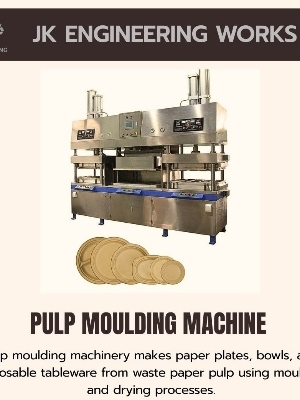
Tell us about your requirement

Price:
Quantity
Select Unit
- 50
- 100
- 200
- 250
- 500
- 1000+
Additional detail
Mobile number
Email

More Products in Industrial Machine Category
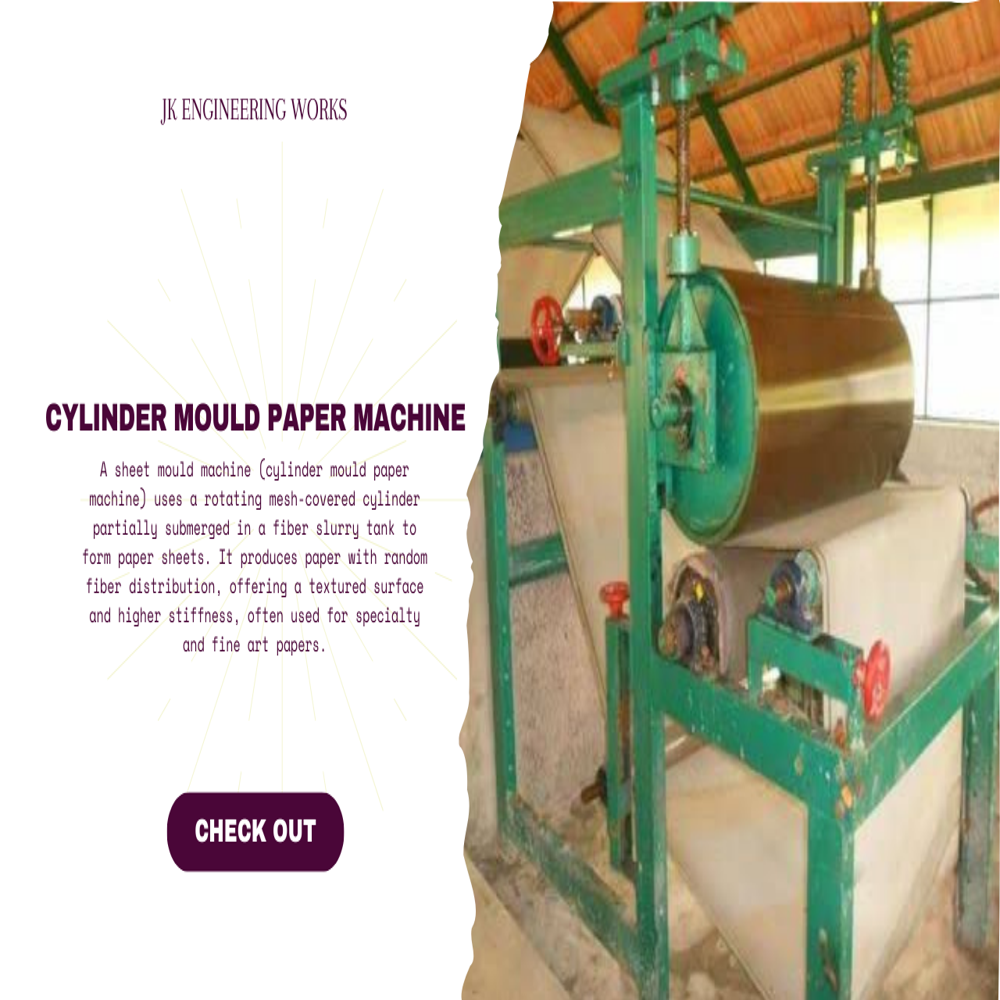
Mill board Machine
Price 1090000.0 INR / Unit
Minimum Order Quantity : 1 Unit
Color : Blue & White
Computerized : No
Dimension (L*W*H) : 3500 x 1900 x 2200 mm Millimeter (mm)
Material : Mild Steel
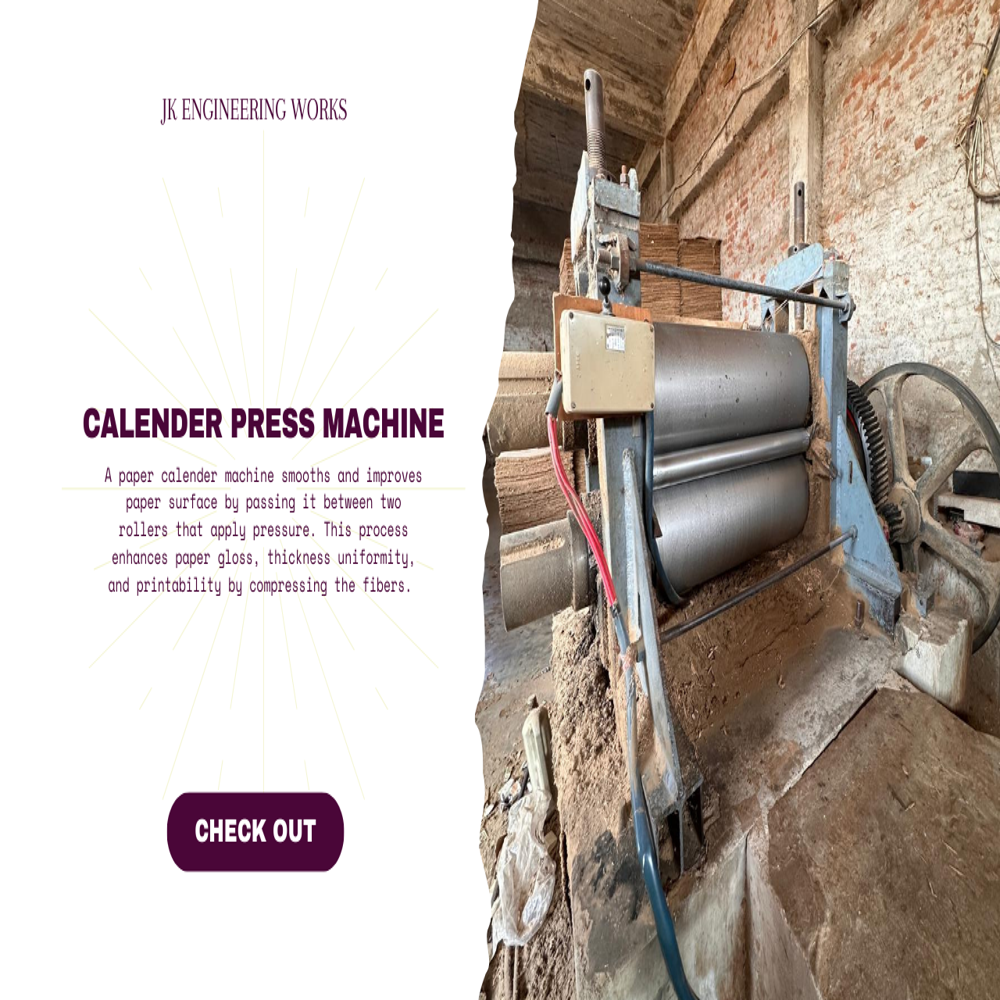
Paper Calender Machines
Price 260000.0 INR / Unit
Minimum Order Quantity : 1 Unit
Color : Blue & White
Computerized : Yes
Dimension (L*W*H) : 4200 x 1700 x 1900 mm
Material : Mild Steel / Cast Iron
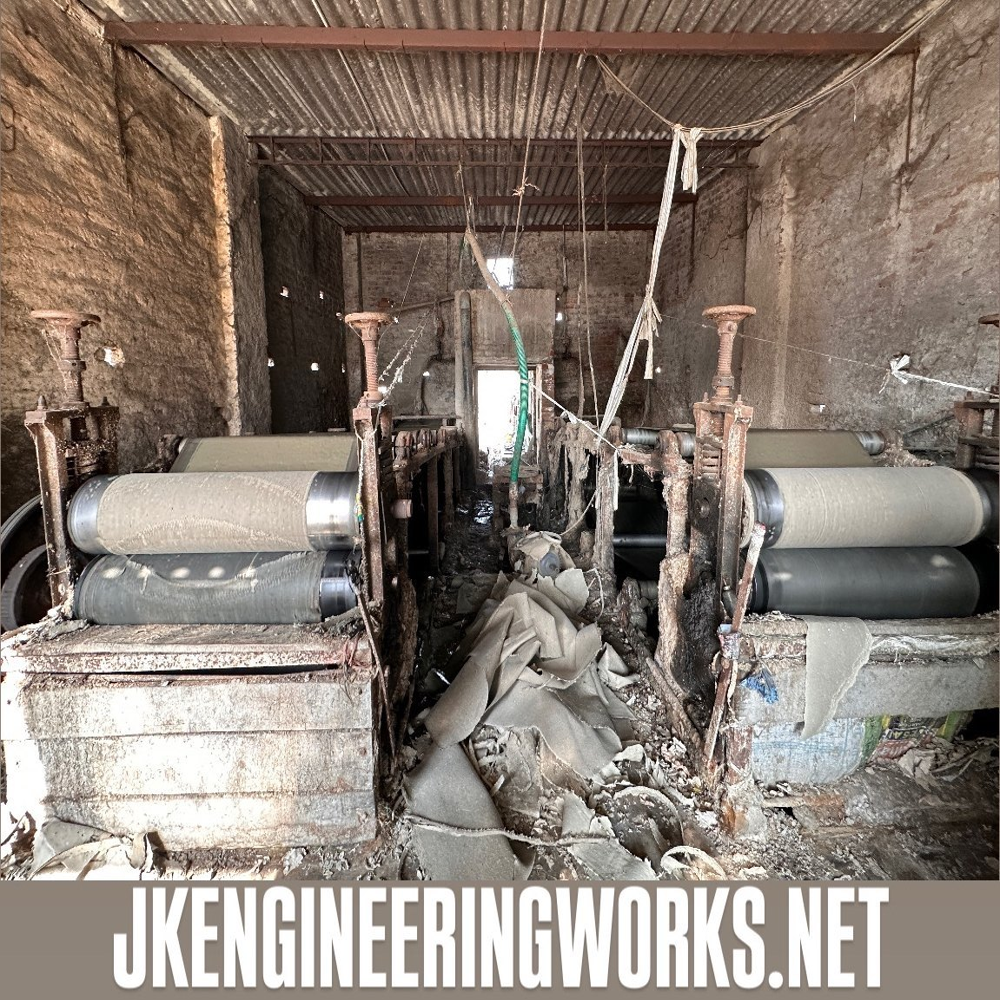
Paper Board Machine
Price 100000.0 INR / Unit
Minimum Order Quantity : 1 Unit
Color : Gray
Computerized : No
Dimension (L*W*H) : Tailored as per requirements Foot (ft)
Material : Steel
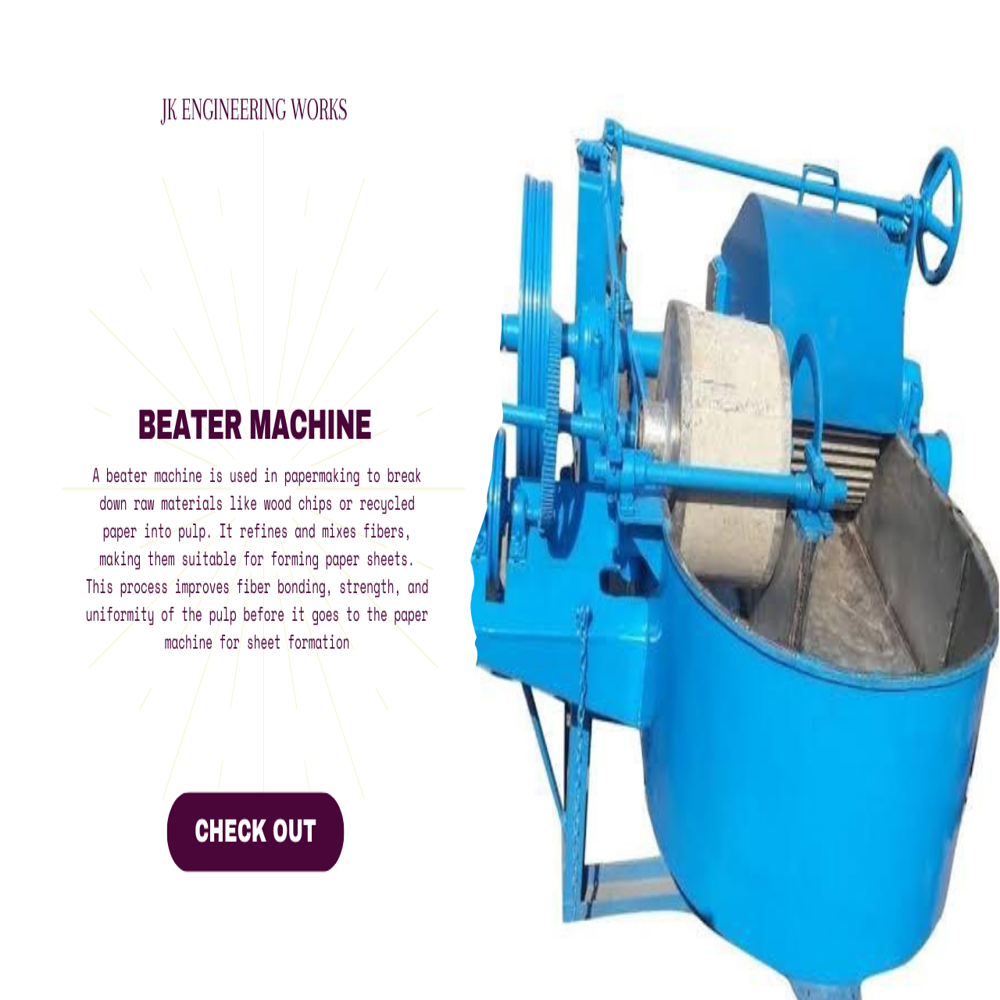
Hollander Beater Machine
Price 100000.0 INR / Piece
Minimum Order Quantity : 1 Piece
Color : Blue
Computerized : No
Dimension (L*W*H) : Customize
Material : Steel

Contact Details
J. K. ENGINEERING WORKS
GST : 08AEWPA5422J1ZA
- Plot No. 30, Kagzi Colony, Sanganer,Jaipur - 302029, Rajasthan, India
- Phone :08045801464
 Send Inquiry
|


Developed and Managed by Infocom Network Private Limited.
